

What Is Greenhouse Gas Accounting?
Greenhouse Gas (GHG) Accounting (also often called carbon accounting) is a top-down approach to measuring emissions across an organization. It classifies emissions into:
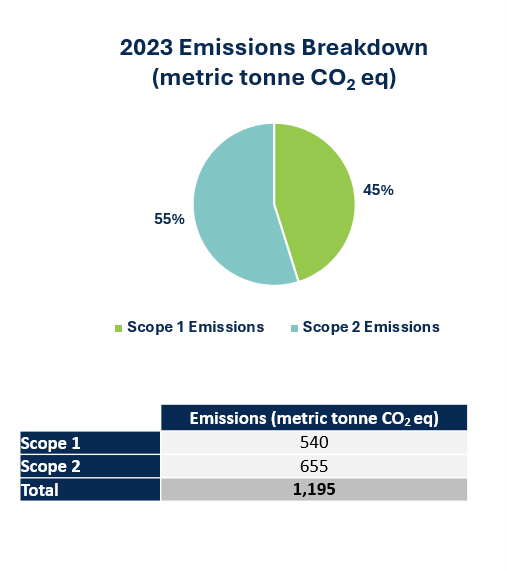
Scope 1 — direct emissions from sources you own or control (e.g., onsite manufacturing, fuel combustion).
Scope 2 — indirect emissions from purchased energy (electricity, steam, chilled water) you import.
Scope 3 — other indirect emissions from your value chain, including supplier goods, transportation, product-use and end-of-life.
By capturing these scopes, you gain a holistic view of your climate impact — not just what happens inside your fence, but what happens upstream and downstream.
Why is GHG Accounting and Reporting important?
GHG Accounting and reporting are essential components for organizations committed to sustainability and environmental stewardship. By systematically measuring, tracking, and disclosing GHG emissions, businesses can:
Quantify their carbon footprint
Set sustainability goals and science-based targets
Develop strategies to reduce their environmental impact
Report to CDP
Meet customer and investor requirements
Comply with regulations and legislation
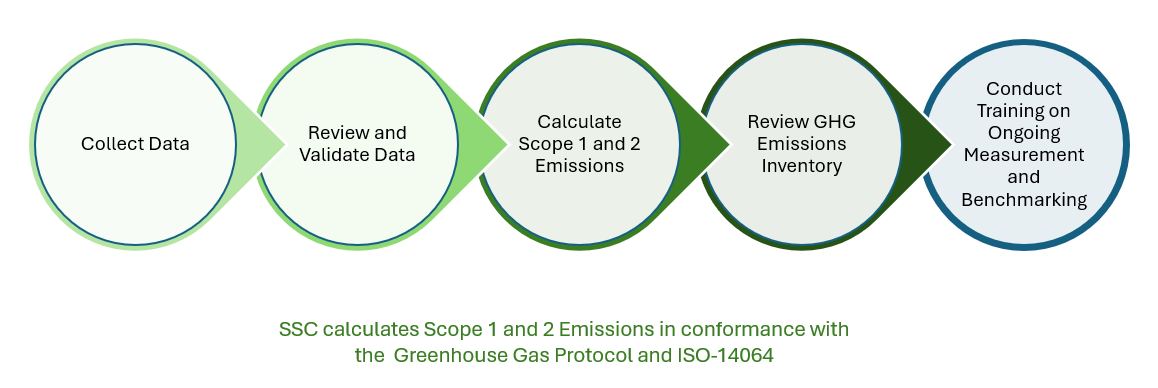
GHG Emissions Inventory Scope 1 and 2 Process
Software Integration
SSC seamlessly integrates your inventory data with your preferred software and spreadsheet platforms. Our team supports direct integration with leading systems, including Workiva and Net Zero Cloud, ensuring accurate data transfer, streamlined workflows, and consistent reporting across your organization.
Proven Results

Decarbonization Master Plan Uncovers $2.5M Annual Savings for Fortune 500 Pharma Manufacturer
SSC developed a decarbonization master plan for a Fortune 500 pharmaceutical manufacturer, aligning with company-wide SBTi targets and prioritizing Scope 1 emissions reduction.

SSC Streamlines Scope 3 Emissions Inventory by Delivering Higher Data Quality for Plastics Company
A global plastics company partnered with SSC to strengthen the accuracy and effectiveness of its Scope 3 emissions inventory. Unlike traditional spend-based analyses, which often overemphasize low-impact categories, SSC applied average data method using life cycle assessment (LCA) databases and primary data on multiple Scope 3 categories.
