
Extended Producer Responsibility (EPR) creates an opportunity to move beyond compliance and develop packaging strategies that support recyclability, sustainability, and cost reduction across multiple states.
As eco-modulation becomes a larger component of EPR programs, companies are being incentivized to make packaging decisions that improve environmental performance. Materials that are recyclable, contain recycled content, or use less material may qualify for lower fees, while hard-to-recycle materials can result in higher costs.
To identify opportunities for EPR fee reduction, companies need reliable data on how packaging materials perform throughout their lifecycle. This is where Life Cycle Assessments (LCAs) become valuable.
What is a Life Cycle Assessment?
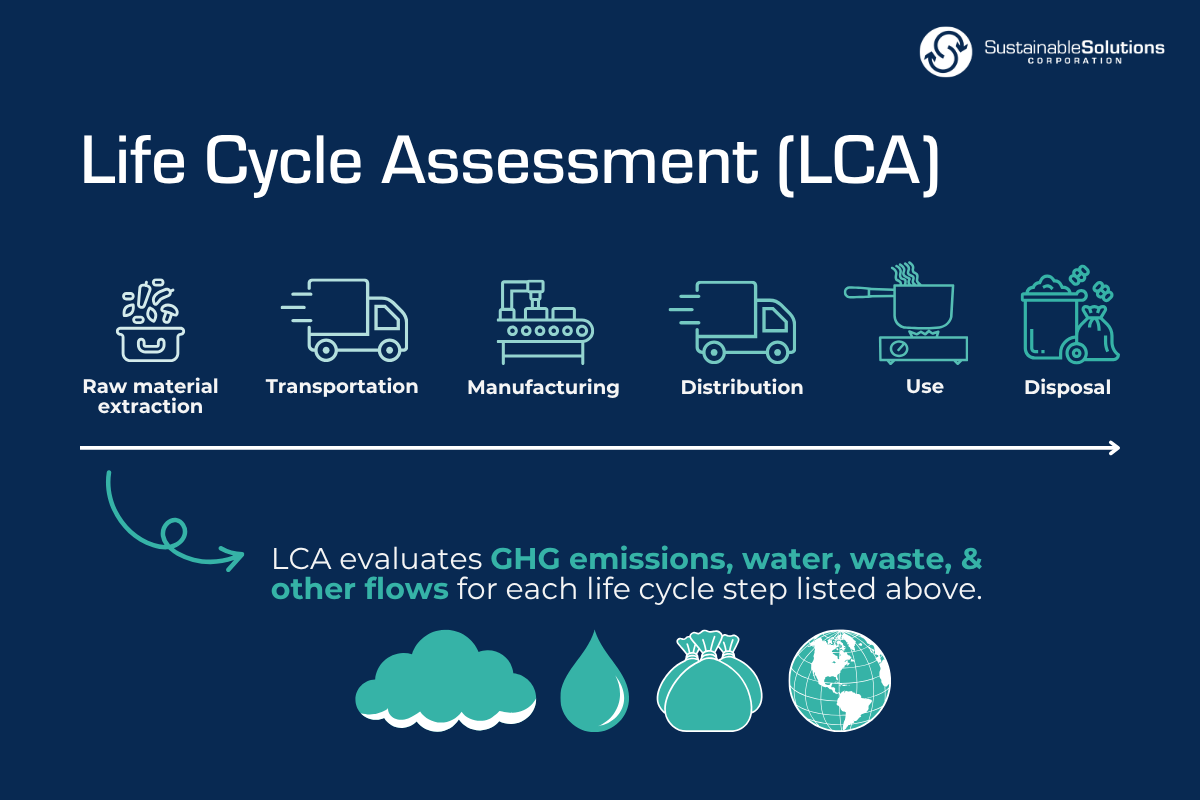
A Life Cycle Assessment (LCA) evaluates the environmental impacts of a product or package across its entire lifecycle, from raw material extraction through manufacturing, use, and end-of-life management.
LCAs provide a data-driven foundation for evaluating packaging decisions and allow companies to:
Compare packaging materials and formats
Identify environmental and cost hotspots
Quantify the impact of packaging redesigns
Evaluate recyclability and end-of-life outcomes
Support eco-modulation strategies with accurate data
Identify opportunities for material substitution and process improvements
Understand the impacts of recycled content within a package
By understanding the environmental performance of packaging materials, organizations can make more informed decisions that support both sustainability goals and long-term EPR cost reduction.
Understanding LCA System Boundaries
Depending on project objectives, LCAs are typically conducted using one of three system boundaries:
Cradle-to-Gate: Evaluates impacts from raw material extraction through manufacturing.
Cradle-to-Gate with Options: Expands the assessment to include additional stages such as transportation, distribution, or product use.
Cradle-to-Grave: Evaluates the entire product lifecycle, including raw material extraction, manufacturing, use, and end-of-life disposal or recovery.
LCAs are developed in accordance with ISO 14040 and ISO 14044 standards and require third-party critical review when results are shared externally.
For EPR-related packaging decisions, a cradle-to-grave LCA often provides the most comprehensive view of environmental impacts and can help identify hotspots throughout the product lifecycle, from raw material extraction through end-of-life management.
The Connection Between Extended Producer Responsibility and Life Cycle Assessments
As EPR programs continue to evolve, companies need better visibility into how packaging materials perform across their lifecycle. LCAs help organizations understand the tradeoffs between packaging materials and identify opportunities to reduce both environmental impacts and regulatory costs.
According to the Circular Action Alliance:
"A literature review of life cycle assessments generally shows that use of recycled materials results in a lower product environmental footprint than use of virgin materials within the same material category."
For example, an LCA may reveal that a packaging material with a lower upfront purchase cost results in higher EPR fees because of poor recyclability or limited recovery options.
Alternatively, a slightly more expensive packaging material may improve recyclability and lower long-term regulatory costs through eco-modulation incentives, creating value beyond its initial purchase price.
While many companies use LCAs internally to compare packaging alternatives and identify optimization opportunities, some EPR programs are beginning to directly reward lifecycle-based decision making.
Oregon's EPR Program Rewards Lifecycle Thinking
Oregon's Extended Producer Responsibility program provides one of the clearest examples of how lifecycle thinking can directly influence EPR costs and create financial incentives for sustainable packaging improvements.
Through its eco-modulation bonus structure, Oregon offers financial incentives to producers who use Life Cycle Assessments to demonstrate environmental improvements in packaging design.
Bonus A: Submit a third-party reviewed LCA on qualifying SKUs to receive fee credits and discounts on future program fees.
Bonus B: Demonstrate packaging improvements through an LCA and receive larger fee reductions tied to environmental performance improvements.
Bonus C: Receive credits for transitioning from single-use packaging to reusable or refillable systems supported by lifecycle modeling.
These incentives demonstrate a growing trend within EPR programs: rewarding companies that can quantify environmental improvements through data-driven methodologies.
Beyond Measurement: Using LCAs to Optimize Packaging
The true value of an LCA extends beyond measuring environmental impacts. Organizations can use LCAs to compare a baseline package against alternative materials, formats, or designs to determine which option delivers the best balance of environmental performance, recyclability, cost, and EPR outcomes.
This process, often referred to as LCA optimization, helps companies identify opportunities to:
Reduce material use
Increase recycled content
Improve recyclability
Eliminate high-fee materials
Reduce long-term EPR costs
As EPR regulations continue to expand, LCAs are becoming more than environmental reporting tools. They are increasingly serving as strategic decision-making tools that help organizations design packaging for both environmental performance and financial resilience.
Sustainable Solutions Corporation (SSC) helps organizations use Life Cycle Assessments to identify packaging optimization opportunities, evaluate material alternatives, and support long-term EPR fee reduction strategies.
Download our free Extended Producer Responsibility by Design eBook to learn how LCAs, Design for Environment (DfE) tools, and Sustainable Product Innovation (SPI) can help support smarter packaging decisions.
Frequently Asked Questions
how long does it take to develop a Life Cycle Assessment?
On average, the timeline for development of an LCA/EPD can range from three to ten months. The timeline can depend on a range of factors including:
Product complexity
Number of sites included in the scope
Number of LCA reports needed
Duration of time required for the company to provide the necessary data
Time required for the third-party review by the Program Operator or critical reviewer
Organizations that already have strong product and packaging data may be able to streamline portions of the process.
Are There Financial Incentives for Conducting a Life Cycle Assessment Under EPR Regulations?
Certain EPR programs are beginning to provide financial incentives for producers that use Life Cycle Assessments to demonstrate environmental improvements in packaging design.
For example, Oregon's EPR program includes eco-modulation bonuses that reward producers who conduct third-party reviewed LCAs and use the results to improve packaging sustainability.
Can a Life Cycle Assessment Help Reduce EPR Fees?
Yes, in some states it can provide fee credits and discounts on future program fees. It provides the data needed to identify packaging improvements that may lower costs under EPR fee structures, using Design for Environment tools and Sustainable Product Innovation.
Meet the Expert

Tad Radzinski,
PE, SEP, LEED AP, SFP
Co-Founder & President
Tad Radzinski is a recognized sustainability expert and former EPA Waste Minimization National Expert with over 35 years of experience advising Fortune 500 companies. He is Co-founder and President of Sustainable Solutions Corporation, providing decarbonization consulting and training across industries, and Co-founder of GreenCircle Certified, which verifies sustainability claims for top brands like P&G, 3M, and Amazon.
Tad co-hosts the Tad Talks Sustainability podcast, simplifying complex topics and featuring major companies. He also helped develop Villanova University’s MS in Sustainable Engineering and taught there for 18 years, covering Life Cycle Assessment and Sustainable Buildings and Operations.