
As 2030 approaches, many organizations are facing a difficult reality: despite setting ambitious sustainability targets, progress is falling behind, especially when it comes to Scope 3 emissions reduction.
Many companies have already completed their emissions inventories and identified where their impacts lie. However, the largest share of emissions, and often the most overlooked, are Scope 3 emissions.
Scope 3 emissions are often the largest contributor to a company’s total footprint because they occur across the value chain through suppliers, transportation providers, service partners, and capital goods.
This presents a difficult challenge because these emissions are beyond a company’s direct control. Organizations know which categories are driving impact, which suppliers contribute the most, and where reductions need to happen. But turning that insight into action requires something many companies underestimated: active, ongoing collaboration with their supply chain.
Why Scope 3 Emissions Reduction Depends on Supplier Engagement
Reducing Scope 3 emissions is inherently complex because it depends on supplier engagement and supply chain sustainability.
Large organizations often have dedicated sustainability teams, internal expertise, and access to resources. However, their suppliers do not always have the same level of support. Many suppliers lack sustainability experience, do not fully understand greenhouse gas reporting, and are unsure how to set targets or build reduction plans.
Yet these same suppliers are responsible for the majority of emissions companies are trying to reduce. This creates a gap where organizations can set goals, but suppliers ultimately determine whether those goals are achievable.
Common Barriers to Scope 3 Emissions Reduction
Even with the right intentions, companies run into three major roadblocks:
Limited Internal Resources: A small sustainability team cannot realistically support thousands of suppliers at scale.
Knowledge Gaps Across the Supply Chain: Suppliers often do not know what is expected or where to start.
Unrealistic Expectations: Many organizations assume suppliers will figure it out, even when resources are limited and guidance is unclear.
Meeting supplier emission reduction goals does not happen passively. It requires collaboration supported by clear guidance and ongoing interaction.
To make real progress, companies need to shift their approach. Instead of issuing requirements and sharing one-way resources, they need to enable suppliers, provide ongoing support, and guide action in real time. When suppliers are given practical direction, the knowledge gap begins to close and there is a stronger understanding of the role they play in emissions reductions.
How Collaboration Improves Scope 3 Emissions Reduction
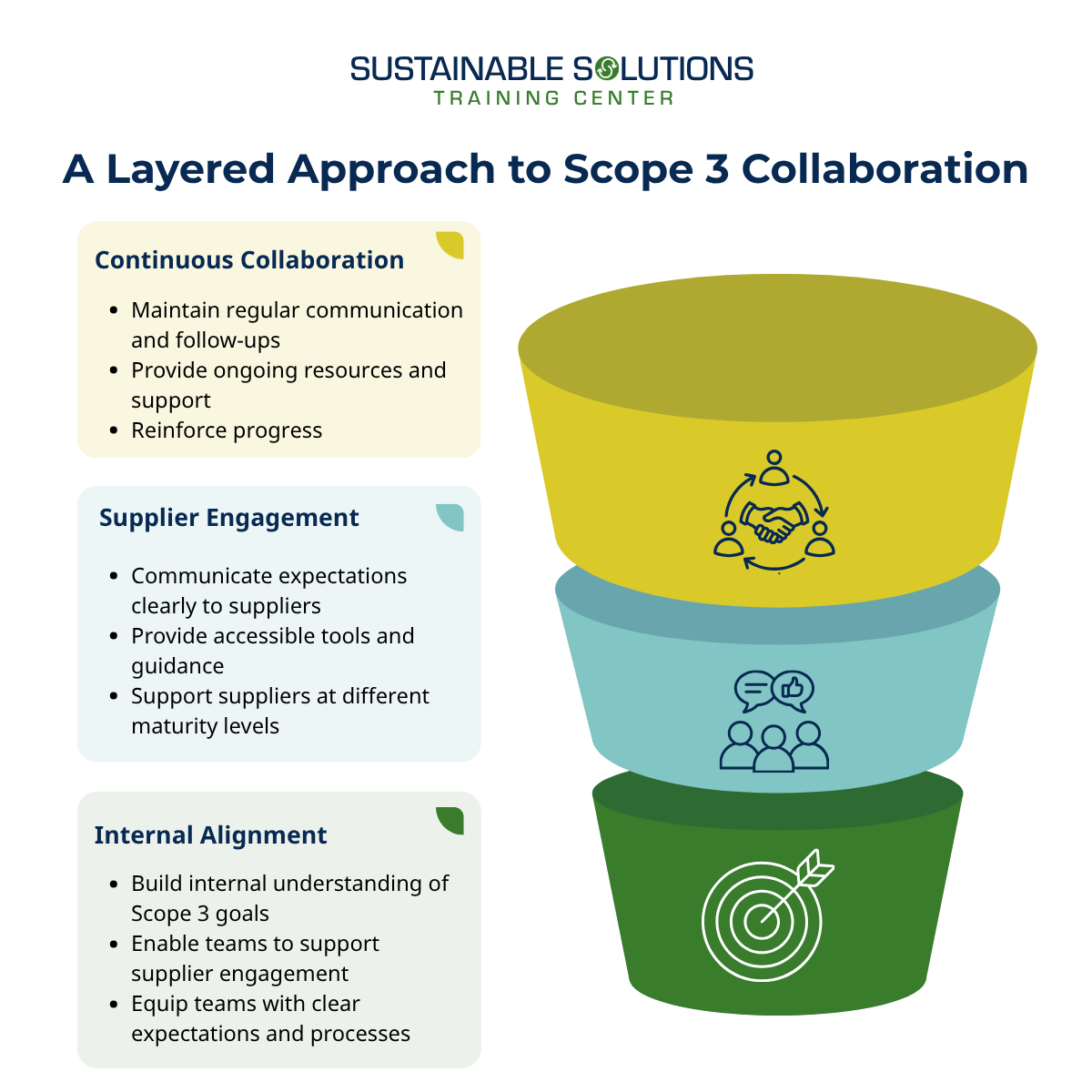
Collaboration is not just external. It is layered and essential to any successful Scope 3 sustainability strategy.
It starts internally by aligning sustainability and procurement teams and equipping them with practical knowledge. It then extends outward by clearly communicating expectations to suppliers and providing accessible tools and support. It continues through consistent communication, ongoing resources, and regular engagement.
Organizations that succeed in Scope 3 emissions reduction are the ones that treat collaboration not as a one-time effort, but as an integrated strategy across their entire value chain.
The Cost of Waiting on Supplier Engagement
One of the biggest risks companies face today is assuming there is still time to act on their sustainability goals. But supply chain transformation does not happen overnight. Supplier engagement is only the beginning—measuring emissions, building reduction plans, and implementing changes is a time-intensive process
Delaying supplier engagement can put 2030 sustainability goals at risk. Companies that wait too long often find themselves reacting instead of executing a clear strategy.
Empower Your Suppliers to Deliver on Sustainability Goals
Engaging suppliers starts with ongoing education and clear guidance that supports implementation. The Sustainability Help Desk, offered through the Sustainable Solutions Training Center, provides organizations with access to senior engineers who have supported thousands of companies across strategy, products, and operations.
This resource helps suppliers navigate reporting requirements, track emissions, and implement reduction plans with confidence. It also eliminates hours of research by delivering tailored support aligned with your organization’s goals and industry demands.
Sustainability Help Desk Benefits
Improve Supply Chain Data and Decision Confidence
Get accurate, expert-backed answers that improve reporting quality, reduce errors, and support informed sustainability decisions.
Accelerate Progress Towards Sustainability Goals
Move faster on Scope 3, supplier engagement, and sustainability commitments with practical, implementation-ready guidance and tools.
Save Time, Money, and Internal Effort
Reduce back-and-forth with suppliers or members and eliminate time spent searching for unclear answers.
Human Expertise, Not AI Chatbots
Real engineers delivering actionable insights informed by work in hundreds of manufacturing facilities.
Organizations that invest in supplier collaboration and support today will be best positioned to achieve their 2030 sustainability goals. To see how the Sustainability Help Desk works in practice, submit a question and receive your first response at no cost.
Frequently Asked Questions
Why are companies struggling to meet their Scope 3 emissions reduction goals?
Many companies struggle with Scope 3 emissions reduction because the majority of emissions come from their supply chain, not their direct operations. While organizations may have clear goals and internal resources, suppliers often lack the knowledge, tools, and support needed to take action. Without consistent engagement and guidance, progress can stall.
How can companies effectively engage suppliers on emissions reduction targets?
Effective supplier engagement starts with clear communication and practical support. Companies should define expectations, provide actionable guidance, and offer resources such as training or expert support. Ongoing communication and accessible tools help suppliers understand what is required and how to take the next steps.
What tools are available to support supplier engagement in sustainability initiatives?
The Sustainable Solutions Training Center offers a Sustainability Help Desk that provides suppliers with direct access to mechanical and chemical engineers who can answer sustainability questions, clarify reporting requirements, and guide them through emissions reduction efforts. This type of support helps remove confusion, improve response rates, and enable suppliers to take meaningful action more quickly.
Meet the Expert
Tad Radzinski,
PE, SEP, LEED AP, SFP
Co-Founder & President
Tad Radzinski is a recognized sustainability expert and former EPA Waste Minimization National Expert with over 35 years of experience advising Fortune 500 companies. He is Co-founder and President of Sustainable Solutions Corporation, providing decarbonization consulting and training across industries, and Co-founder of GreenCircle Certified, which verifies sustainability claims for top brands like P&G, 3M, and Amazon.
Tad co-hosts the Tad Talks Sustainability podcast, simplifying complex topics and featuring major companies. He also helped develop Villanova University’s MS in Sustainable Engineering and taught there for 18 years, covering Life Cycle Assessment and Sustainable Buildings and Operations.