

Upcoming Webinar
September 10, 2026 at 11:00 AM EDT
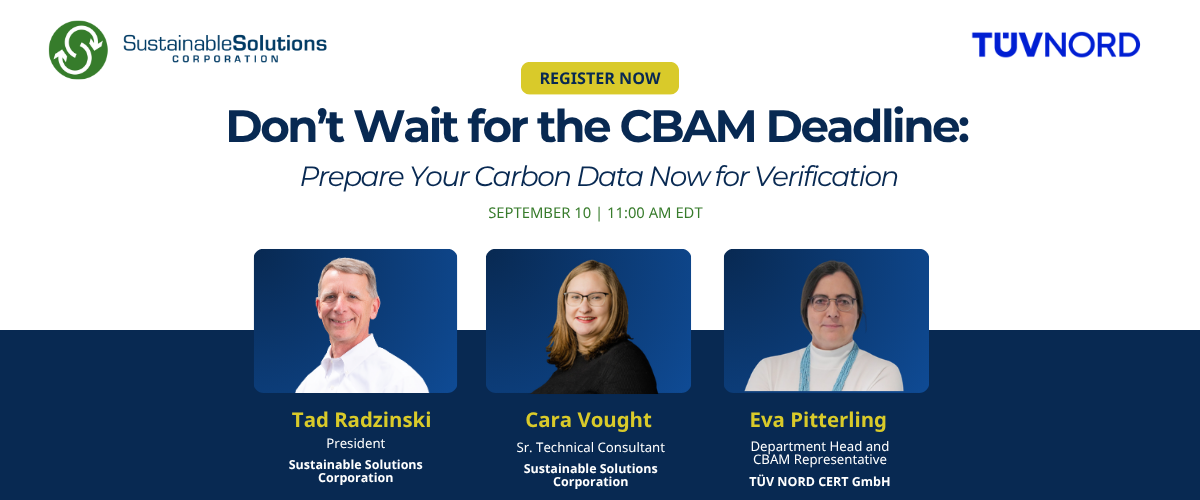
The first annual Carbon Border Adjustment Mechanism (CBAM) declaration may not be due until September 2027, but the emissions data behind it are being generated now.
Companies that wait until the reporting deadline approaches may discover they do not have the monitoring processes, supplier information, documentation, or data quality needed to report verified actual emissions. Closing those gaps can take months, particularly when emissions data must be collected across multiple facilities, products, production processes, and suppliers.
The EU Carbon Border Adjustment Mechanism’s definitive regime began in January 2026 and applies to covered products entering the European Union, including the iron and steel, aluminum, fertilizer, hydrogen, cement, and electricity sectors. Organizations that cannot provide verified actual emissions data may need to rely on conservative default values, potentially increasing their CBAM costs.
Join Sustainable Solutions Corporation and TÜV NORD CERT for a practical discussion designed to help manufacturers, exporters, suppliers, and EU importers understand what they should be doing now to prepare for CBAM reporting and verification.
What You’ll Learn
Key CBAM requirements, covered industries, and upcoming reporting and verification milestones
How to calculate embedded emissions and establish a compliant monitoring plan
How organizational GHG inventories, life cycle assessments, and supplier engagement can strengthen CBAM data readiness
How Scope 1, 2, and 3 emissions measurement and allocation training can help internal teams collect, manage, and understand their embedded carbon data
What to expect from CBAM verification, including voluntary pre-engagement, site visits, monitoring plan readiness, and the benefits of identifying data and compliance gaps early
How verified actual emissions data can reduce reliance on conservative default values and help manage future CBAM costs
Attendees will also hear practical examples of how manufacturers are assessing embedded carbon, improving emissions data quality, and preparing their systems and documentation for verification.
Learn how you can begin preparing now for more time to resolve data gaps, coordinate with suppliers, establish defensible methodologies, and avoid a last-minute rush ahead of the 2027 CBAM declaration, due September 30, 2027.
On-Demand Recordings
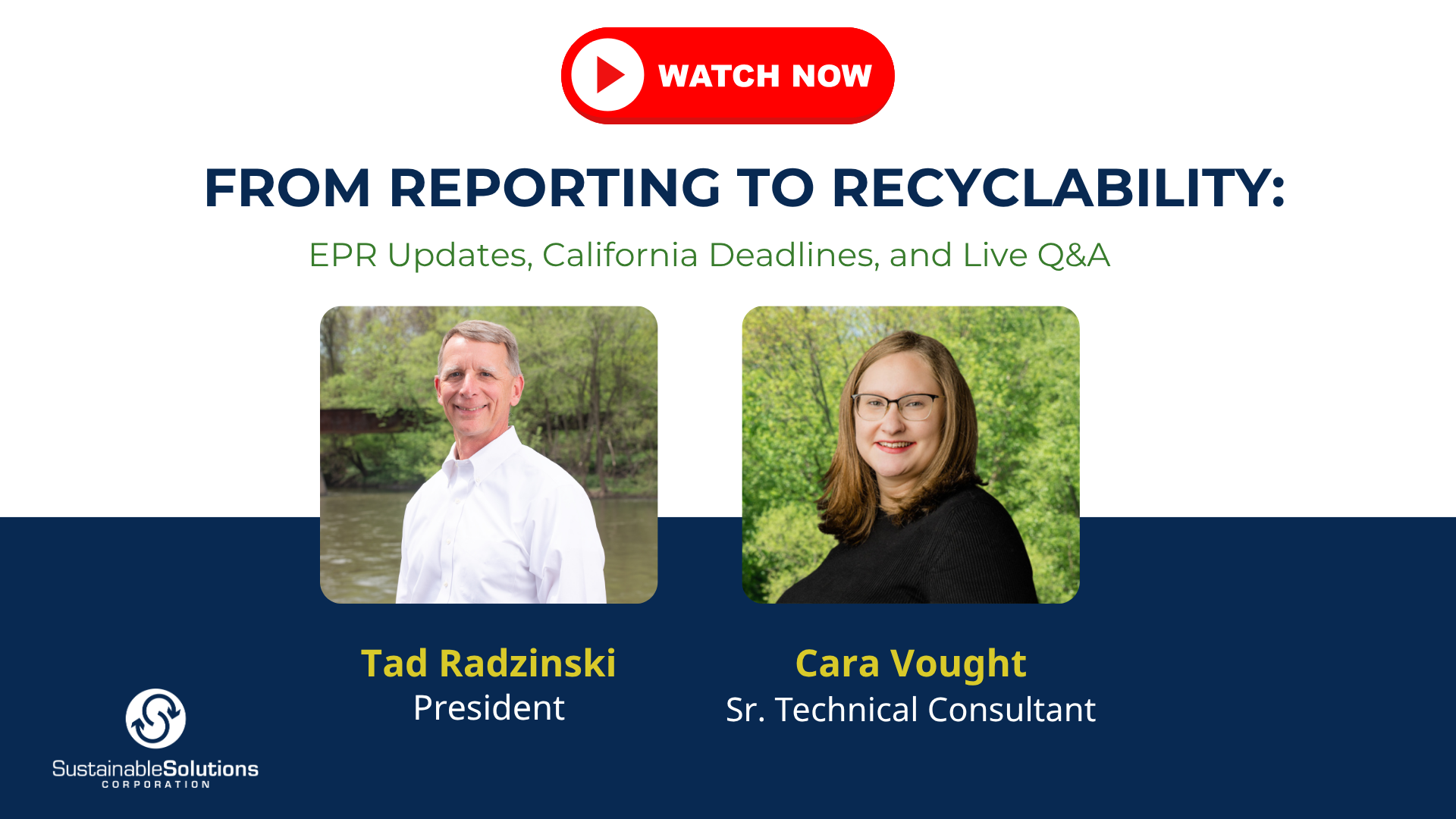
Recorded July 29, 2026
As packaging regulations continue to evolve across the United States, experts from Sustainable Solutions Corporation discuss the latest developments in California’s Extended Producer Responsibility (EPR), review reporting requirements and source reduction planning obligations, and answer audience questions.
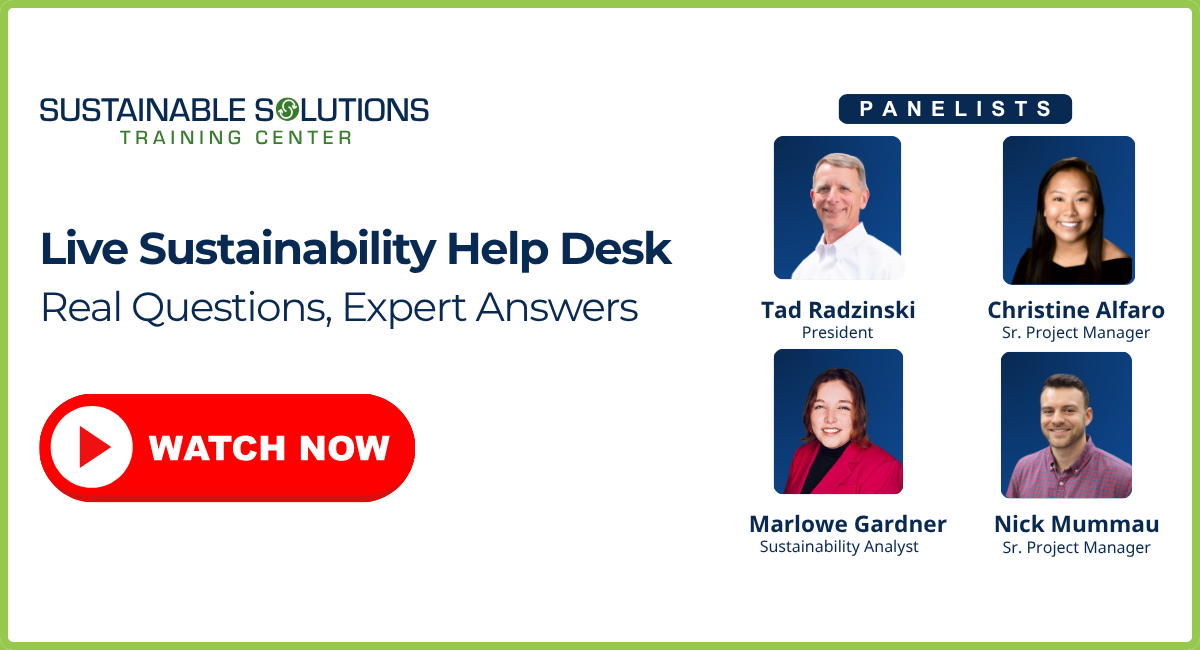
Recorded May 12, 2026
In this webinar, the Sustainable Solutions Training Center provided a live demo of the Sustainability Help Desk — a service providing direct access to senior engineers for practical guidance on sustainability challenges. Our experts answered 14 audience questions related to energy efficiency, EPR and global regulations, LCAs and carbon accounting, and zero waste strategies.
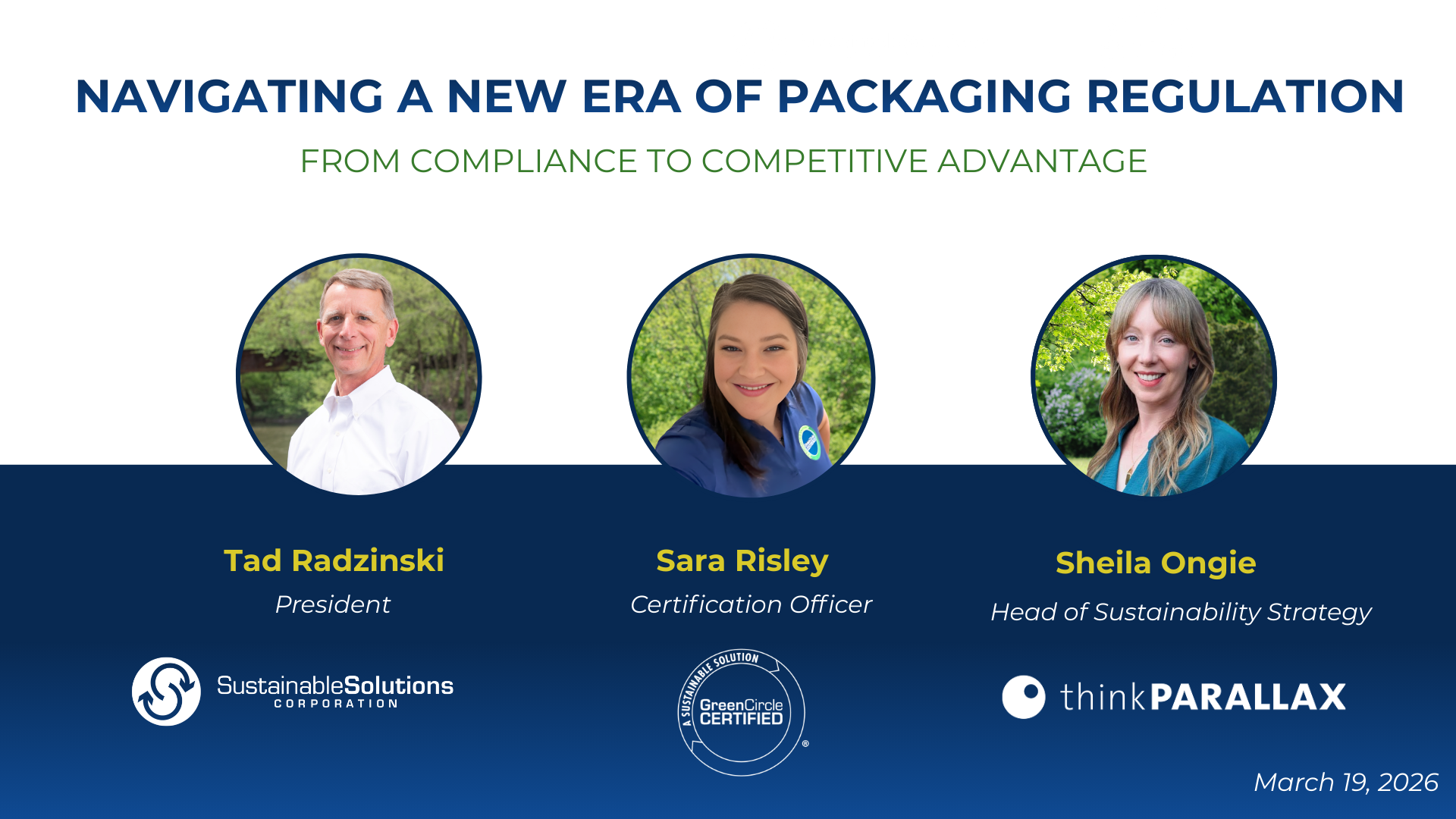
Recorded March 19, 2026
Extended Producer Responsibility is reshaping packaging strategy across the U.S. In this webinar, experts from Sustainable Solutions Corporation, thinkPARALLAX, and GreenCircle Certified explore how brands can navigate evolving EPR regulations and turn compliance into competitive advantage.
Educational Series: Achieve Your Decarbonization Goals with LCA and PCF
A comprehensive three-part educational course that teaches you the fundamentals of Life Cycle Assessments (LCA) and Product Carbon Footprints (PCF).
“These webinars were an excellent use of time and I would not hesitate to sign up for more.”

Scope 3 Webinars
RECORDED
MAY 15, 2024
New regulations as well as commitments and requirements from large organizations are pushing companies to measure Scope 3 emissions and set science-based targets. The truth is most companies often feel overwhelmed by the scale of this effort and don’t know where to start. In this educational webinar, Tad Radzinski provides actionable steps for measuring, reporting, and reducing your Scope 3 Emissions.
In this hands-on learning experience, Tad discusses:
An Overview of Scope 1, 2, and 3 Emissions
Various Regulations and Market Drivers for Measuring, Reporting, and Reducing Scope 3 Emissions
Strategies for Measuring and Reporting Scope 1, 2, and 3 Emissions
Scope 3 Baselining/Hot Spot Process for Identifying your Company's Top Scope 3 Categories
The Importance of Suppliers in Measuring and Reducing Scope 3 Emissions
Measuring and Reporting Scope 3 Emissions for Continuous Data Improvement
RECORDED
MAY 22, 2024
SSC’s President, Tad Radzinski, presented on a free educational webinar hosted by Sustain.Life about tackling Scope 3 emissions in purchased goods and services. Sustain.Life is a carbon accounting platform that can help you calculate your company's carbon footprint, set science-based targets, and simplify climate disclosures.
SSC has partnered with Sustain.Life and we are actively using their software to not only help our clients measure GHG emissions and Scope 3, but also as a comprehensive sustainability tracking and reporting platform.
RECORDED
2020
Product optimization and embodied carbon in products are hot topics in 2020. Our previous webinar explained what embodied carbon is new tools to evaluate embodied carbon in products, and the movement by architects, producers, and government agencies to set goals on reducing embodied carbon and to establish laws and policies. We are hosting a second webinar to explain how companies are understanding embodied carbon in their products and to introduce carbon-negative products. We will also discuss integrating sustainable product innovation to reduce embodied carbon and optimize products by reducing the overall environmental and health impacts. Join us with our expert panel to learn why embodied carbon is important and to understand how product manufacturers can design more sustainable products.
