
Extended Producer Responsibility (EPR) regulations are changing how packaging decisions are made. Beyond focusing on cost and performance alone, producers now need to consider how recyclability, EPR fees, source reduction targets, and regulatory requirements influence a product's overall financial and environmental performance.
California's Senate Bill 54 (SB 54) is one example of how EPR is changing the packaging decision-making process. Organizations are expected to evaluate packaging through a broader lens, balancing product performance with compliance requirements while identifying opportunities to reduce plastic packaging.
Under SB 54, producers are required to submit an Individual Source Reduction Plan to the Circular Action Alliance (CAA), California's Producer Responsibility Organization, by August 1, 2026. The plan explains how producers intend to reduce the amount of single-use plastic packaging supplied into California by 25% by 2032 compared to their 2023 baseline.
Who Needs to Submit an Individual Source Reduction Plan?
Producer definitions vary by state, so organizations should seek legal guidance when determining their obligations. Generally, a producer is the company most directly tied to the product's brand and covered material. In California, this is typically the company that manufactures a product using covered material and owns the brand or trademark under which the product is sold, offered for sale, or distributed within the state.
To learn more about how a ‘producer’ is defined in California, check out CalRecycle’s page.
Understanding the 2023 Baseline
The 2023 source reduction baseline is based on the total amount of plastic material sold, offered for sale, or distributed into California during 2023, based on weight and number of components. This baseline serves as the starting point for measuring future source reduction efforts.
For many organizations, developing a source reduction plan begins with understanding their existing packaging data. Producers need to identify how much plastic packaging is used across their product portfolio before evaluating opportunities to reduce it.
Many organizations already have much of this information from California's Annual Supply Report and Baseline Producer Report submitted to the Circular Action Alliance earlier this year. However, producers should also review how their packaging has changed over time, particularly if previous source reduction efforts were implemented before 2023.
Because packaging data is often spread across multiple departments, developing a source reduction plan requires collaboration between procurement, product development, research and development, packaging engineers, technical teams, and sustainability professionals. Each group contributes a different piece of the overall packaging picture.
Packaging Portfolios Are More Complex Than They Appear
Product packaging can be nuanced. A single product line may be sold in multiple package sizes and formats, each with different packaging components. For example, a yogurt manufacturer may offer individual cups, pouches, tubes, family-size containers, and bulk retail packages. While the product remains the same, each package configuration contributes differently to the organization's plastic packaging footprint.
Understanding these differences is an important first step in identifying source reduction opportunities. Organizations first need to understand what packaging they have before determining where plastic can be reduced.
The Five Source Reduction Pathways Under California SB 54
As part of the Individual Source Reduction Plan, producers are required to forecast, by weight and plastic components, how much plastic they plan to reduce.
To achieve the 25% source reduction target by 2032, producers can use five approved pathways. Each pathway has specific contribution limits, meaning no single pathway can be used to achieve the entire 25% reduction target.
At least 10% of the reduction must come from the first two pathways, while the remaining 15% can come from pathways three through five.
The five approved pathways are:
Replace single-use plastic packaging with reusable or refillable packaging systems.
Eliminate unnecessary plastic components from a product or package.
Shift from single-use plastic to non-plastic materials.
Reduce plastic use through lightweighting, product concentration, or bulk packaging formats.
Increase the use of post-consumer recycled content, where certification requirements are met.
Rather than relying on a single strategy, producers can combine multiple pathways across their product portfolio to achieve their overall reduction target.
Packaging Decisions Require Trade-Offs
Reducing plastic is rarely as simple as replacing one material with another.
Lightweighting may reduce material use and lower costs, while replacing plastic with paper or another material could increase packaging costs. At the same time, those material changes may reduce EPR fees, improve recyclability, or support source reduction goals.
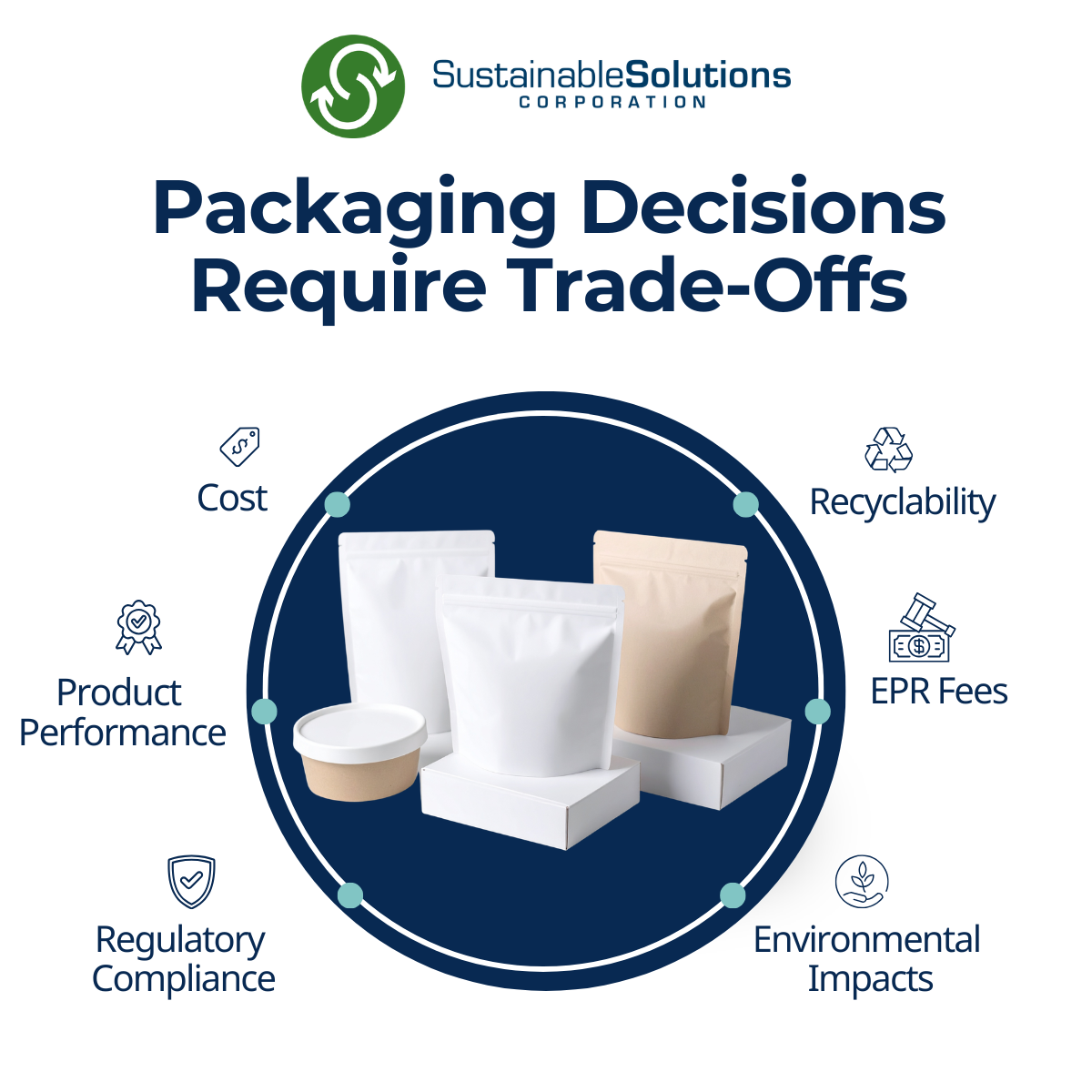
Today's packaging decisions require organizations to evaluate multiple trade-offs including:
Cost
Product performance
Regulatory compliance
Recyclability
EPR fees
Environmental impacts
Making changes to only one factor can create unintended consequences elsewhere in the packaging system.
Looking Beyond Compliance
California's SB 54 is more than a reporting requirement. It encourages every producer to rethink how packaging is designed and managed throughout a product's lifecycle.
By applying life cycle thinking, organizations can compare packaging alternatives, evaluate trade-offs, identify source reduction opportunities, and make informed packaging decisions backed by data.
At Sustainable Solutions Corporation, we help organizations evaluate packaging through Sustainable Product Innovation (SPI), Design for Environment (DfE), and Life Cycle Assessment (LCA). These tools provide the data needed to balance packaging performance, compliance, environmental impacts, and business goals while preparing for evolving EPR requirements.
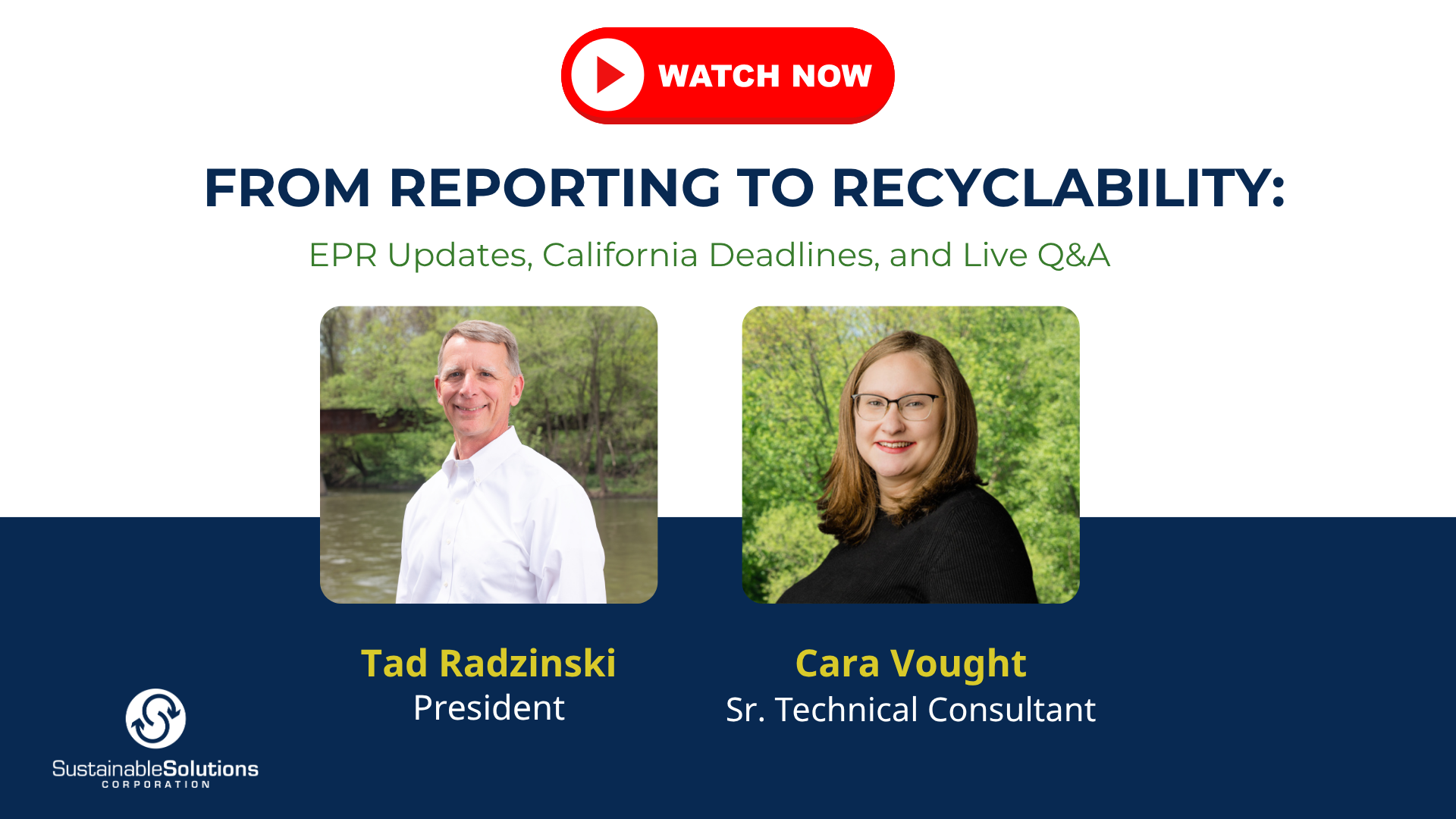
If you’re looking for more information about California’s SB 54 or EPR, watch our on-demand webinar recording, From Reporting to Recyclability: EPR Updates, California Deadlines, and Live Q&A.
During this webinar, we cover the latest developments in California’s Extended Producer Responsibility, review reporting requirements and source reduction planning obligations, and answer audience questions.
Frequently Asked Questions
What is an Individual Source Reduction Plan?
An Individual Source Reduction Plan outlines how producers intend to reduce the amount of single-use plastic packaging supplied into California compared to a 2023 baseline while working toward a 25% reduction by 2032.
Can producers rely on one source reduction pathway?
No. Each pathway has contribution limits, and producers are expected to combine multiple strategies to achieve the overall source reduction target.
Why are packaging data and plastic components important?
In order to develop a source reduction plan organizations need to understand how much plastic packaging exists across their product portfolio, including individual plastic components and their associated weight. This information supports accurate forecasting and helps identify opportunities for source reduction.
Meet the Expert

Cara Vought, LCACP
Senior Technical Consultant
Cara has over 15 years of experience in product stewardship and corporate sustainability strategy. She specializes in developing life cycle assessments (LCAs) and product carbon footprints, conducting independent LCA reviews to ISO standards, supporting industry associations and collaboratives in program development, and facilitating audits for sustainable manufacturing initiatives and LEED certifications.
She earned a Bachelor of Science in Chemical Engineering from the University of Delaware, with minors in Sustainable Energy Technology and Environmental Engineering. Cara also served as an adjunct professor at Jefferson University, where she taught architecture and design students how to think about materials sustainably. She believes that sustainability is an ever-evolving field that requires continuous learning and adaptation. With a passion for education, she works closely with SSC’s clients to help them expand their knowledge and integrate sustainability into their business practices.
Disclaimer: SB 54 and EPR regulations continue to evolve. This article is for general informational purposes only and does not constitute legal advice. Consult legal counsel for guidance specific to your organization.