

Meet EPR Regulatory Requirements, Optimize Packaging, and Reduce EPR Fees
Sustainable Solutions Corporation provides Extended Producer Responsibility (EPR) consulting services to help organizations meet EPR compliance requirements, reduce EPR fees, and optimize packaging. Our engineering-led approach evaluates material use, recyclability, environmental impact, packaging performance, and cost to help your organization develop sustainable packaging strategies that support regulatory compliance, sustainability goals, and financial objectives.
Meet EPR compliance requirements
Evaluate your packaging’s environmental impact
Reduce EPR fees and packaging costs
Identify packaging source reduction opportunities
Optimize packaging performance, cost, and sustainability
EPR Compliance Is More Than Paying Fees
EPR compliance requires coordination across your organization. Packaging, sustainability, procurement, finance, compliance, operations, and other teams all play a role in managing packaging data, understanding EPR costs, meeting reporting requirements, and making sustainable packaging decisions. With EPR affecting multiple areas of the business, cross-functional alignment is essential for making informed decisions and developing a long-term strategy.

Navigating Multi-State EPR Requirements Reporting
EPR reporting obligations, timelines, covered materials, and fee structures vary by state, making multi-state compliance complex.
Incomplete or Disorganized Packaging Data
Packaging information can be spread across bills of materials, procurement systems, suppliers, facilities, and internal teams which can make it difficult to prepare for EPR reporting and compliance.
Forecasting EPR Fees and Costs
Without reliable packaging data and visibility into applicable fee structures, organizations can struggle to estimate EPR fees, forecast costs, and identify opportunities for fee reduction.
Meeting Source Reduction Requirements
Requirements such as California's SB 54 introduce source reduction considerations beyond traditional EPR reporting and fees.
Balancing Packaging Performance, Cost, and Sustainability
Reducing weight or changing materials can affect performance, cost, recyclability, product protection, and environmental impacts.
Limited Internal Resources
Packaging engineers, sustainability teams, procurement teams, and compliance professionals already have competing priorities, making EPR data collection and packaging optimization difficult to manage internally.
Explore our Extended Producer Responsibility Consulting Services
EPR Compliance Support
Prepare for evolving Extended Producer Responsibility (EPR) requirements with compliance consulting and support tailored to your organization. SSC’s EPR consultants help your team understand applicable regulations and reporting requirements, review and organize packaging data, identify data gaps, and estimate potential EPR fees across states. Our experts work alongside your team to improve EPR reporting readiness and develop informed packaging and compliance strategies.
-
Improve Packaging Data Readiness
- Review, organize, and identify gaps in packaging data needed to support EPR reporting requirements and compliance.
-
Estimate EPR Fees More Accurately
- Use your packaging data to estimate potential EPR fees based on applicable state requirements and proposed fee structures to support more accurate cost forecasting and planning.
-
Identify Source Reduction Opportunities
- Evaluate packaging and material use to identify opportunities for packaging source reduction that support EPR requirements while considering performance, cost, and environmental impact.
-
Develop an EPR Strategy
- Move beyond responding to individual requirements with a strategy that helps your organization prioritize compliance actions, identify packaging optimization opportunities, and prepare for evolving EPR programs.
Life Cycle Assessment (LCA) Services
Life Cycle Assessments (LCAs) provide a data foundation for evaluating packaging optimization strategies and identifying opportunities to reduce EPR fees. LCAs evaluate environmental impacts across the entire life cycle, including raw materials, manufacturing, use, and end-of-life. In states like Oregon, Life Cycle Assessments can support structured eco-modulated fee reductions, known as eco-modulation bonuses, that reward improvements in the environmental impacts of covered products.
Identify environmental and cost “hotspots”
Quantify the impact of design changes
Support eco-modulation strategies with defensible data
Design for Environment (DfE) Tools
SSC offers Design for Environment (DfE) tools that support engineers and designers in integrating sustainability into product design and packaging development by evaluating materials, performance, cost, and environmental impact throughout the product development process. Powered by Life Cycle Assessment (LCA) data, these enable informed packaging decisions in real time, helping organizations identify opportunities to optimize packaging, reduce environmental impacts, and lower EPR fees.
Compare Multiple Design Scenarios Side by Side
Evaluate Trade-Offs Across Carbon, Recyclability, and Cost
Identify Opportunities to Reduce Material Use
Select Packaging That Minimizes Environmental Impact and EPR Fees
Sustainable Product Innovation (SPI)
SSC’s EPR consultants work cross-functionally with product development, engineering, procurement, and marketing teams to deliver Sustainable Product Innovation (SPI) workshops and customized sustainability scorecards tailored to each company’s products and business goals. These tools help companies establish sustainability criteria that can be integrated directly into existing product development and Stage-Gate processes. SSC’s SPI scorecards provide teams with a structured framework for optimizing packaging and material decisions across performance, cost, recyclability, environmental impact, and EPR considerations, helping organizations integrate sustainable packaging strategies into product development.
-
Develop Customized SPI Tools & Scorecards
Create tailored sustainability frameworks aligned with your products, packaging materials, EPR requirements, and business goals. -
Train Product Development Teams
Equip engineering, procurement, marketing, and product teams with practical SPI strategies and sustainability evaluation methods to support informed packaging and material decisions. -
Integrate SPI Into Stage-Gate Processes
Embed sustainability and EPR considerations directly into Stage-Gate workflows through customized checkpoints and scorecards. -
Pilot & Scale Implementation
Support implementation and establish a scalable framework for integrating sustainable packaging practices into ongoing product development and continuous improvement.
What Can an EPR Consulting Engagement Include?
TAILORED SUPPORT FOR EPR COMPLIANCE AND PACKAGING OPTIMIZATION
Each EPR engagement is tailored to your organization’s compliance requirements, packaging portfolio, and business priorities. Based on the scope of the engagement, SSC can provide EPR consulting support, compliance strategies and tools to improve EPR readiness, reduce costs, and optimize packaging. The following highlights some of our most commonly requested EPR consulting services.
Packaging Data Assessment
Review available packaging information, identify data gaps, and determine the information needed to support EPR reporting and analysis.
EPR Fee Estimates
Estimate potential EPR fees using available packaging data and applicable or proposed state fee structures.
Source Reduction Strategy
Identify and prioritize opportunities to reduce packaging materials while considering packaging performance, cost, and regulatory requirements.
EPR Strategy & Roadmap
Develop a prioritized plan outlining actions, responsibilities, and next steps for preparing for EPR requirements and improving packaging over time.
Customized Tools & Scorecards
Develop decision-making frameworks that help product development teams incorporate EPR and sustainability criteria into ongoing packaging decisions.
Expected Business Outcomes From EPR Consulting
Meet Your Financial and Sustainability goals While Supporting EPR Compliance
Improved EPR Readiness
Establish the packaging data, processes, and internal responsibilities needed to prepare for evolving EPR compliance and reporting requirements.
Greater Visibility Into EPR Costs
Understand how packaging portfolios and design decisions can influence current and future EPR fees to support more accurate cost forecasting and planning.
Reduced Packaging & Material Use
Identify source reduction opportunities that can decrease material consumption and packaging waste while supporting regulatory objectives.
Better Packaging Decisions
Evaluate cost, performance, recyclability, environmental impact, and EPR implications to make informed packaging design and material selection decisions before implementing packaging changes.
Scalable EPR Processes
Build scalable processes and decision-making frameworks that support EPR compliance and reporting requirements across multiple products and jurisdictions.
Optimized Packaging Strategy
Move away from reacting to individual regulations by integrating EPR compliance and sustainability considerations into ongoing packaging and product development.
Standards & Methodologies
SSC applies an engineering-led approach to Extended Producer Responsibility (EPR) consulting that helps organizations prepare for EPR compliance and reporting requirements while developing strategies to reduce EPR fees, optimize packaging, and achieve source reduction targets.
Applicable Standards, Frameworks & Methodologies
Life Cycle Assessment (LCA)
Evaluates the environmental impacts of a product or packaging throughout its life cycle. SSC conducts Life Cycle Assessments in accordance with ISO 14040 and ISO 14044 standards to identify environmental hotspots in packaging materials and provide defensible data that can inform packaging optimization, material selection, and EPR decisions.
Waste Minimization & Source Reduction
Prioritizes preventing and reducing material use at the source, helping organizations identify packaging source reduction opportunities that can support EPR requirements while reducing packaging waste and material costs.
Design for Environment (DfE)
SSC's Design for Environment tools help organizations integrate sustainability directly into product and packaging development by evaluating materials, environmental impact, performance, cost, and other design considerations when comparing packaging materials and design alternatives.
Sustainable Product Innovation (SPI)
Creates a proactive framework for packaging optimization by integrating sustainability and EPR considerations into product and packaging design decisions early in the development process, rather than addressing them after material and packaging decisions have already been made.
Industry Applications for EPR Consulting
There is no one-size-fits-all approach to preparing for EPR compliance requirements or optimizing packaging. Each industry has unique product and packaging needs, and many products must meet specific requirements related to food safety, sterilization, durability, product protection, or regulatory compliance. SSC helps organizations evaluate these requirements alongside EPR compliance, sustainability, packaging performance, and cost considerations to develop sustainable packaging strategies tailored to their products and business needs.
Industry Expertise


Consumer Packaged Goods
Evaluate packaging across product portfolios to identify packaging source reduction opportunities, improve recyclability, understand potential EPR costs, and make informed packaging design and material selection decisions.
Food & Beverage
Balance EPR and sustainable packaging objectives with food safety, shelf life, and product protection when evaluating packaging materials and design alternatives.
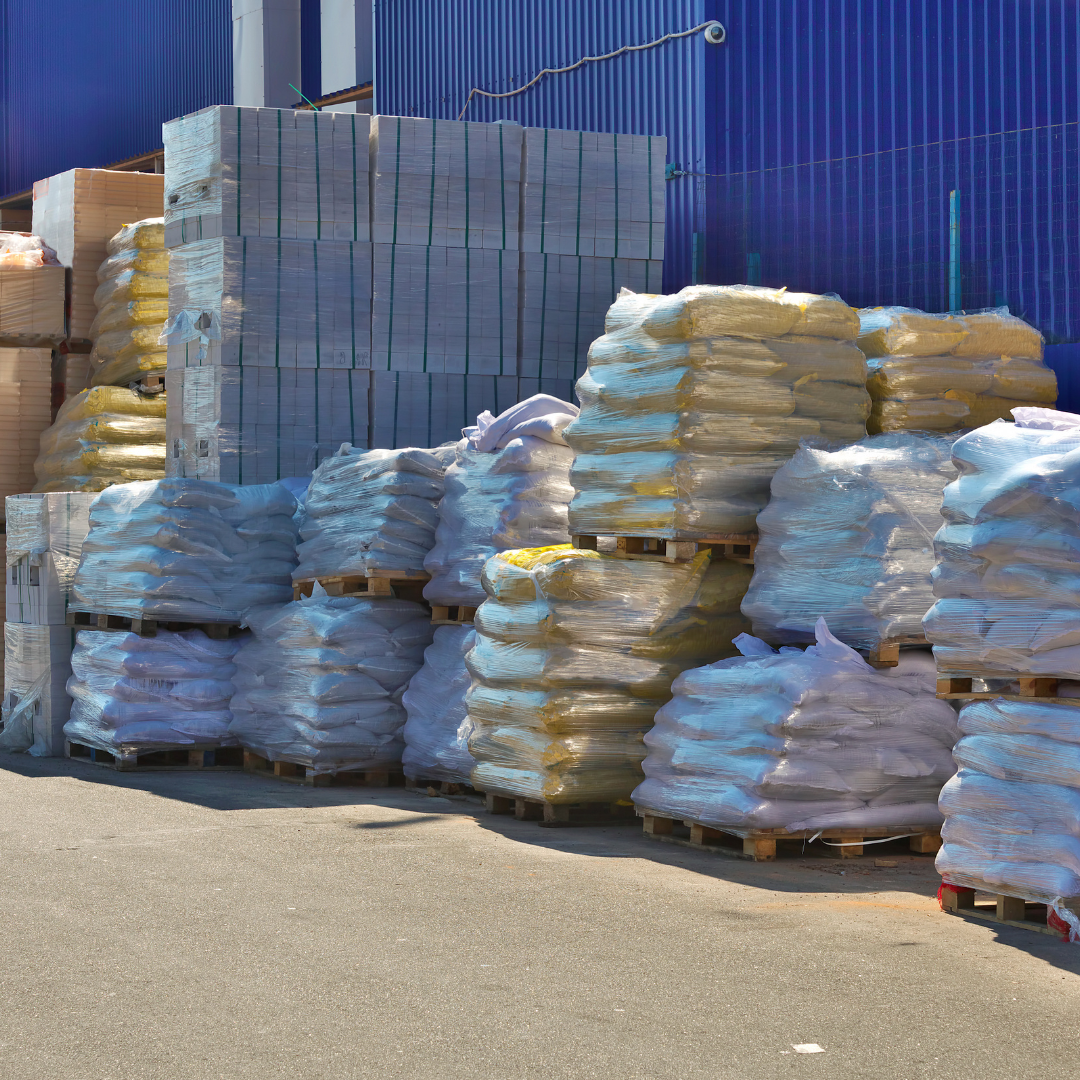
Building Products
Maintain packaging quality for storage and distribution while identifying opportunities to reduce packaging material use, waste, and costs without compromising product protection or installation needs.


Pharmaceutical & Biomedical
Evaluate packaging materials and design alternatives to identify opportunities for improved sustainability while accounting for specialized requirements related to product protection, sterilization, and safety.
Retail
Address EPR compliance and reporting requirements across private-label products, packaging portfolios, suppliers, and distribution while improving visibility into packaging data and identifying opportunities for packaging optimization.
Why Partner with Sustainable Solutions Corporation?
ENGINEERING-LED EPR CONSULTING FOR COMPLIANCE AND PACKAGING OPTIMIZATION

Engineering-Led, Technical Expertise
Work with experienced sustainability professionals who evaluate Extended Producer Responsibility through an environmental and engineering-led approach. We take a holistic view of your packaging and products, considering industry-specific requirements, packaging performance, environmental impact, cost, and regulatory compliance before providing recommendations.

Breadth of Industry Expertise
Benefit from experience supporting organizations across consumer packaged goods, food and beverage, pharmaceuticals, building products, manufacturing, technology, and other industries. Our cross-industry experience helps us develop EPR and sustainable packaging strategies that account for your specific product, packaging, and business requirements.

Value Beyond Compliance
Access EPR expertise in one place, whether you need help understanding EPR compliance and reporting requirements, organizing packaging data, estimating EPR fees, identifying packaging source reduction opportunities, or developing a long-term packaging strategy.

25+ Years of Sustainability Experience
For more than 25 years, we have helped organizations optimize their packaging, long before EPR regulations were enforced in the United States. Our experience in sustainability and packaging allows us to develop solutions that reduce environmental impacts while meeting packaging and business goals.
“The SSC team are highly qualified professionals in the field of sustainability. SSC has assisted Merck with achieving and, in some instances, exceeding our corporate sustainability goals.”
Explore EPR Compliance, Fee Reduction, and Sustainable Packaging Resources
Case Studies

Zero Waste to Landfill Strategy Delivers $10M+ in Potential Cost Savings for Global Consumer Products Company
A global consumer products company partnered with SSC to apply the Operation Zero Waste to Landfill process, uncovering $10M in savings and creating a cross-functional playbook that advances its 2030 zero-waste goal, increases profitability, and mitigates regulatory risk.

235M Gallons of Water Saved and $160K in Annual Savings Help Animal-Based Protein Company Avoid Regulatory Shutdown
To avoid fines, shutdowns, and reputational damage from exceeding its water permit, an animal-based protein company partnered with SSC, whose Sustainability Action Plan improved water efficiency through leak detection, smarter processes, and operational changes.

Coffee Company Secures Customer Confidence with $1M+ Annual Savings and 74% Water Reduction
Facing a nine-month deadline to meet customer sustainability commitments, a large coffee company partnered with SSC, whose Sustainability Action Plan targeted energy, water, and waste to help achieve its ambitious goals.
Blog Articles
Learn how Life Cycle Assessments (LCAs) help companies identify packaging optimization opportunities, reduce Extended Producer Responsibility (EPR) fees, and support eco-modulation strategies across evolving regulations.
In this article, we explore how eco-modulation, Extended Producer Responsibility (EPR) fees, and sustainable packaging strategies can help companies reduce costs and improve compliance readiness.
Learn how Design for Environment (DfE) tools and Sustainable Product Innovation (SPI) help companies optimize packaging, reduce EPR fees, improve recyclability, and support compliance across evolving regulations.
California's SB 54 requires producers to submit a Source Reduction Plan. Learn the requirements, deadlines, and five approved compliance pathways.
Webinars
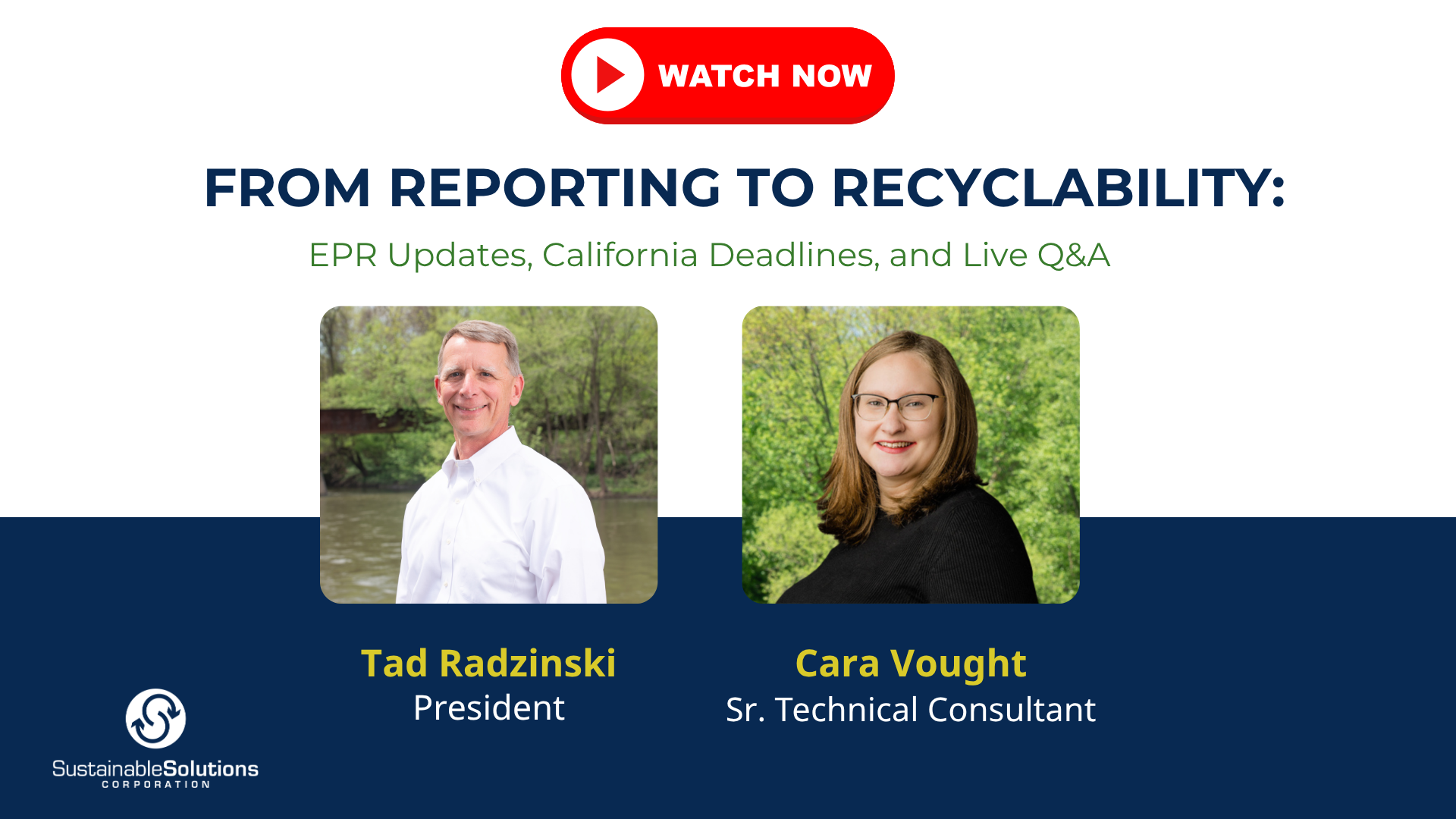
As packaging regulations continue to evolve across the United States, experts from Sustainable Solutions Corporation discuss the latest developments in California’s Extended Producer Responsibility (EPR), review reporting requirements and source reduction planning obligations, and answer audience questions.
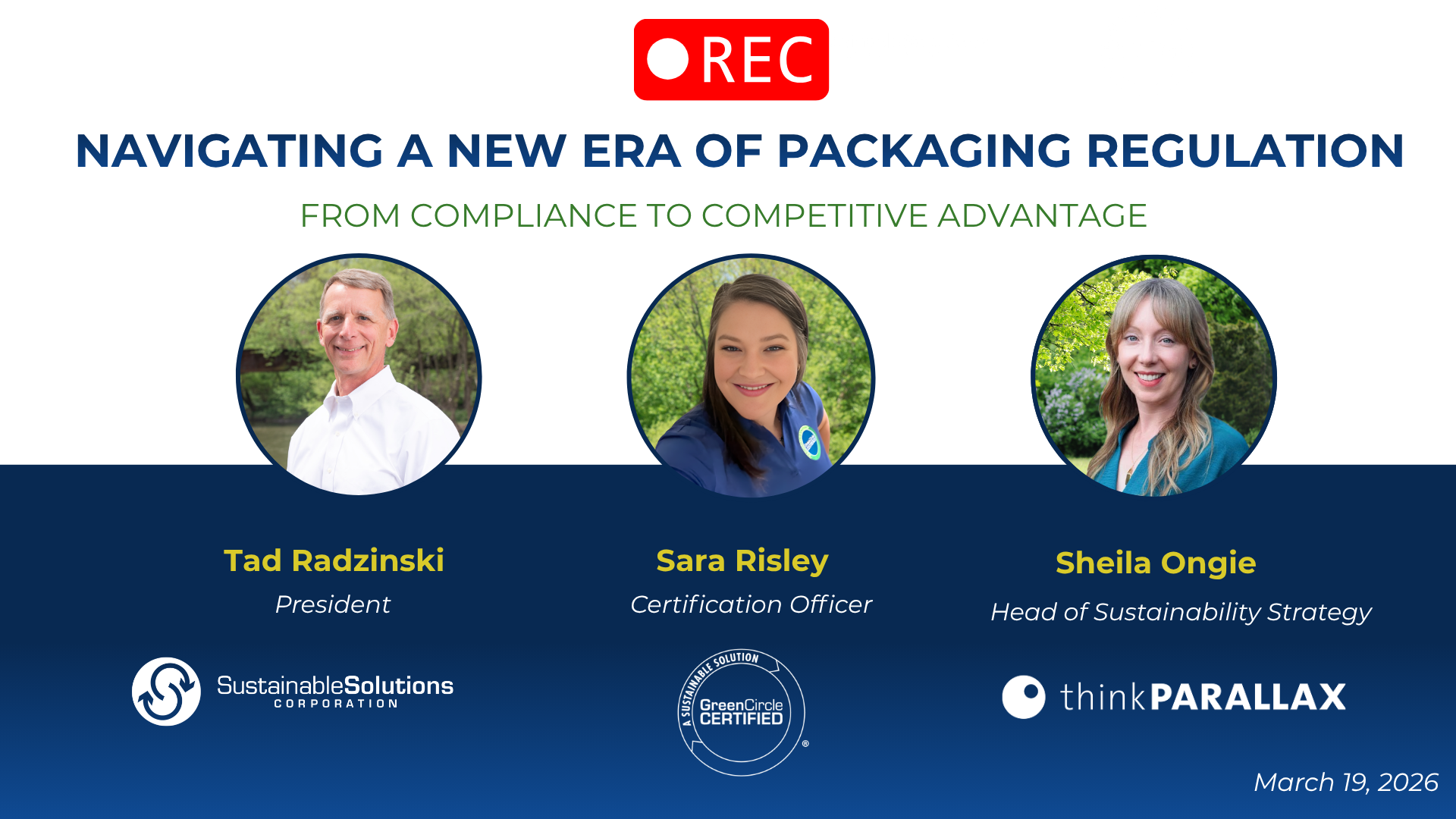
Extended Producer Responsibility is reshaping packaging strategy across the U.S. In this webinar, experts from Sustainable Solutions Corporation, thinkPARALLAX, and GreenCircle Certified explore how brands can navigate evolving EPR regulations and turn compliance into competitive advantage.
Ebook
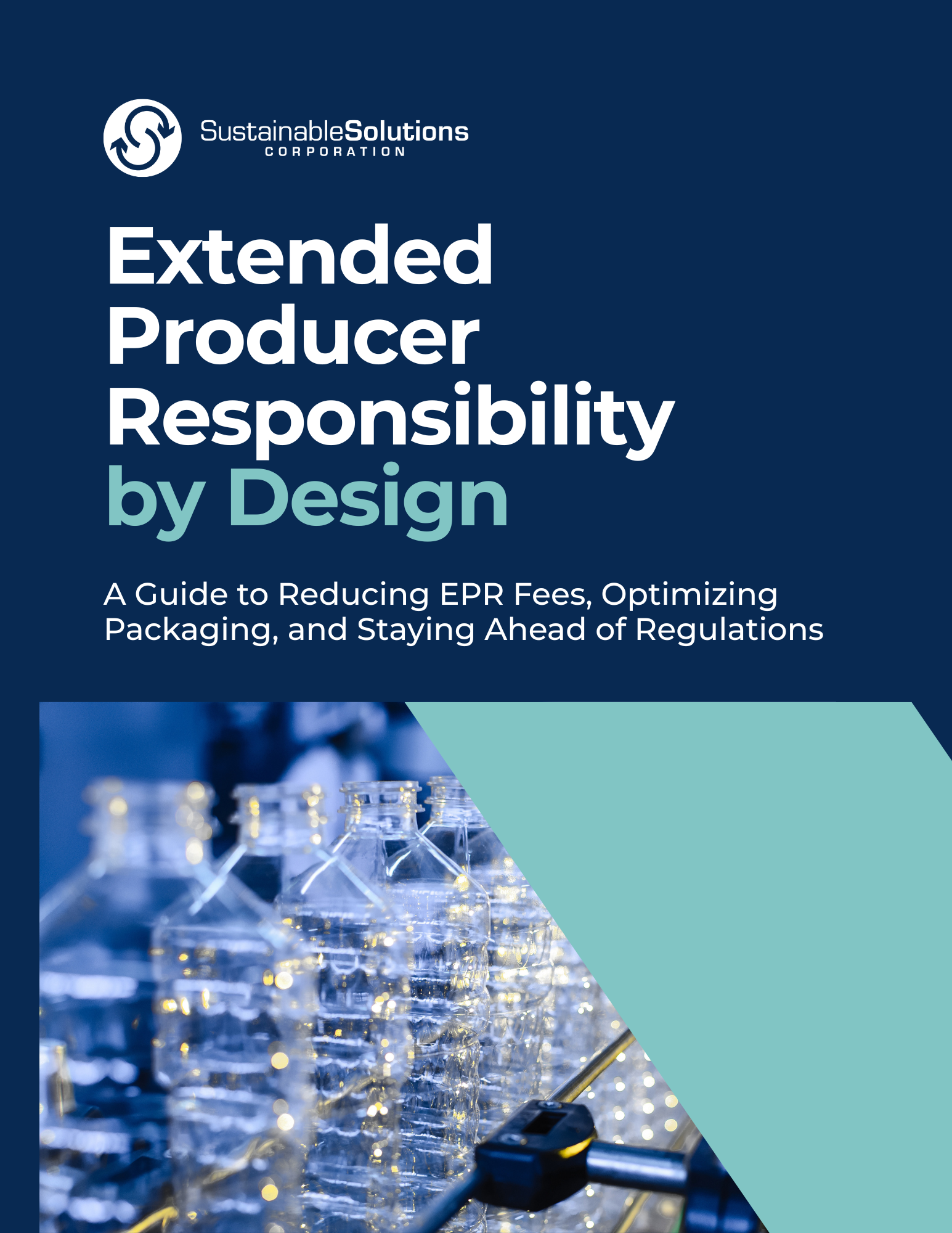
In this eBook we discuss:
Practical strategies for reducing EPR fees through smarter packaging decisions
How Life Cycle Assessments (LCAs) help identify opportunities to lower EPR costs
How Design for Environment (DfE) tools help engineers and packaging designers evaluate cost, performance, recyclability, and environmental impact
Why embedding Sustainable Product Innovation (SPI) into product development helps avoid costly redesigns
How to build a strategic packaging roadmap for evolving multi-state EPR regulations

Connect with a EPR Consulting Expert
Partner with SSC's EPR consultants to navigate compliance requirements, reduce EPR fees, and optimize packaging. Our engineering-led approach helps you develop sustainable packaging strategies that support your regulatory, environmental, and financial objectives.